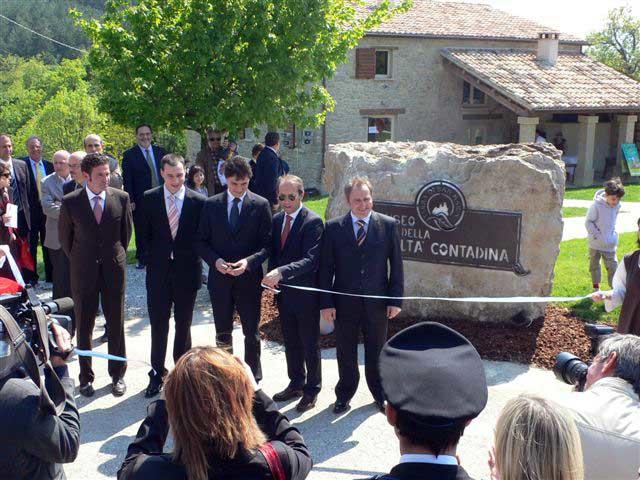
A rural architecture saved
The Casa di Fabrica is recorded in the Sammarinese cadastres as far back as 1770 and is one of the best-preserved examples of an eighteenth-century manorial house of the Republic. After decades of abandonment, patient recovery work led by the Secretariat of State for Territory, Environment and Agriculture together with the Giunta di Castello di Domagnano allowed the building to be returned to the community, keeping intact its typology, materials and internal layout. The choice of conservative restoration was driven by the will not to turn the Casa into a neutral container.
Typologically the building corresponds to the farmhouses of the Titano. The ground floor hosts kitchen, pantry and service rooms; the upper floor was reserved for the rooms of the owning family. The outdoor spaces include stables, communal oven, washhouse and rooms for seasonal work. It is in this layout that the museum develops its route: each room tells a function, each function a piece of pre-industrial Sammarinese economy.
«The museum is the building itself: not a peasant-themed collection placed inside a container, but a rural house reopened to the public.»
Tools, festivities, food
The exhibition route includes implements for grain processing, vineyard and animal husbandry tools, textiles and clothes of everyday life, devotional objects, parish documents and sharecropping contracts. A dedicated space is reserved for the cycle of agricultural work, community feasts and the rites of passage tied to Sammarinese peasant life. The display favours the domestic dimension over the spectacular: the objects are shown in the places where they were actually used.
Seat and access
- Seat
- Casa di Fabrica, Montecchio (Domagnano)
- Access
- By car from the Domagnano road network; parking nearby
- Management
- Giunta di Castello di Domagnano
- Openings
- Calendar curated by the Giunta, priority on weekends and themed feasts
Openings and guided tours vary throughout the year. Verify the calendar before the visit on the channels of the Giunta di Castello di Domagnano.